
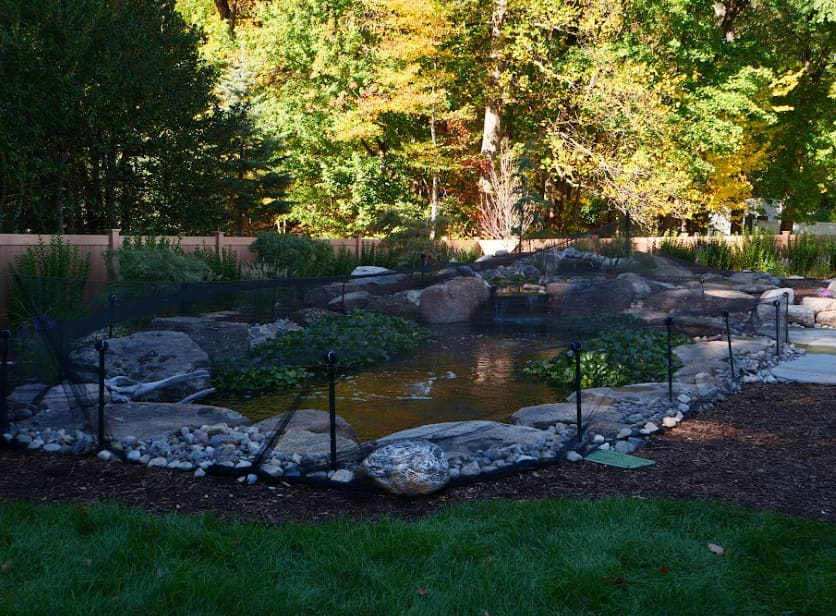
If you are searching for the best pond plants for a koi pond ecosystem, the honest answer is that no single plant is best. A koi pond stays clear because four different jobs get covered at once: surface shade, nutrient uptake at the edges, nutrient uptake in the water column, and oxygenation. Plants are one of the five parts of an ecosystem pond, alongside the skimmer, the biological filter, rock and gravel, and the fish themselves. Get the mix right and the pond largely runs itself. Get it wrong and you will be fighting string algae every June.
This guide is written for zone 6, which covers most of the Hudson Valley, North Jersey, and northeastern Pennsylvania. Everything marked hardy below overwinters outdoors here without being brought in.
The Four Jobs Plants Do in a Koi Pond
| Job | Plant type | Target coverage |
|---|---|---|
| Surface shade | Hardy water lilies, lotus | 40 to 60 percent of the surface in midsummer |
| Edge nutrient uptake | Marginals in the shallow shelf | 60 to 70 percent of the shelf planted |
| Water-column uptake | Floating plants | Seasonal, cover open water in bloom season |
| Oxygen and algae competition | Submerged oxygenators | 1 bunch per 2 square feet of pond floor |
That coverage table is the part most homeowners underplant. A pond with two lilies and a single iris is a decorative pond, not a functioning one. The rule of thumb we give clients is one hardy lily per 10 square feet of surface, marginals along most of the shelf, and oxygenators through the deeper zones.
Best Oxygenators (Submerged Plants)
Oxygenators grow entirely underwater and are the workhorses of water clarity, because they take nitrate directly out of the water column and compete with algae for exactly the same nutrients.
- Hornwort (Ceratophyllum demersum) — Our first pick. Fast-growing, no substrate needed, tolerates cool water, and survives zone 6 winters as sunken fragments that regrow in spring. Koi will nibble it but rarely destroy it. - Anacharis / Elodea — Excellent nutrient uptake and very fast in spring. Koi love eating it, which is fine if you plant enough, but in a heavily stocked pond it can vanish within weeks. - Vallisneria — Rooted, ribbon-leaved, and more resilient to grazing than anacharis because it anchors in gravel. A good choice for ponds with large koi. - Water Starwort (Callitriche) — Tolerates cooler and shadier water than most oxygenators, useful in shaded North Jersey yards.
Planting note: protect oxygenators from grazing for the first few weeks in a stocked pond. Weighted bunches placed in gravel pockets behind rock, or a plant basket with a mesh cage, gives them time to root before koi find them.
Best Floating Plants
Floaters draw nutrients straight from the water with no soil at all, which makes them the fastest way to starve out a green-water bloom in a new pond.
- Water Hyacinth — The most effective nutrient sponge we stock. Roots hang in the water column and koi spawn in them. Tropical, so treat it as an annual here. - Water Lettuce — Similar function, more shade-tolerant, smaller. Also tropical and annual in zone 6. - Frogbit — A neater, less aggressive floater for smaller ponds and patio ponds.
Two cautions. First, both hyacinth and water lettuce are restricted in parts of the region because they are invasive in warmer states. Never dispose of them in a natural waterway; compost them. Second, koi will eat the trailing roots and sometimes shred whole plants. If your koi are large, float them inside a planting ring so they are not pushed into the skimmer.
Best Marginal Plants for Zone 6
Marginals sit on the shallow shelf in 6 to 12 inches of water. They are the plants that make the pond edge look like it belongs, and their root mass is a serious nutrient filter.
- Blue Flag Iris (Iris versicolor) — Native, fully hardy, spring bloom, and deer tend to leave it alone. Our default recommendation. - Yellow Flag Iris — Beautiful and vigorous, but invasive in wetlands. We steer clients to blue flag or Louisiana iris instead. - Pickerel Rush (Pontederia cordata) — Purple spikes all summer, hardy, superb for pollinators, and one of the strongest nutrient users on the shelf. - Sweet Flag (Acorus) — Grass-like, tidy, hardy, and happy in partial shade. Excellent in shaded Union and Morris County yards. - Corkscrew Rush and Dwarf Cattail — Vertical texture for small ponds. Choose dwarf cattail deliberately; full-size cattail will take over. - Taro, Canna, and Elephant Ear — Big tropical foliage for dramatic effect. Not hardy here; overwinter the tubers indoors or treat as annuals.
Hardy Water Lilies: The Surface Shade Layer
Hardy water lilies overwinter in a zone 6 pond with no intervention, provided their crown sits below the ice line, typically on a shelf 18 to 30 inches deep. They are the single most valuable plant in a koi pond because shaded water is cooler, holds more oxygen, and grows less algae.
Reliable hardy varieties for our climate include Attraction, Chromatella, Colorado, Perry's Baby Red, and the white Gonnere. They bloom roughly June to September. Feed them monthly with aquatic tabs through the growing season, or they will produce leaves and no flowers.
Lotus is a separate case: it is hardy here, spectacular, and aggressive. It needs its own wide container, full sun, and space, so we plan for it rather than adding it as an afterthought.
What Koi Will Eat, and How to Plant Around It
This is the question every koi keeper asks second, and it is the reason a lot of planting fails. Koi graze, root, and uproot. They are not being malicious; they are foraging.
| Plant | How koi treat it |
|---|---|
| Anacharis, water hyacinth roots | Eaten readily, often to nothing |
| Hornwort | Nibbled, usually survives |
| Water lily leaves and new shoots | Tugged and sometimes shredded |
| Blue flag iris, pickerel rush, sweet flag | Largely left alone once rooted |
| Any plant in loose soil | Rooted out, soil clouds the water |
The practical answers are simple. Use gravel or heavy aquatic soil capped with gravel, never potting compost. Put lilies in wide baskets with a stone collar. Cage the plants you cannot afford to lose. And plant marginals on the shelf, where koi have the least leverage — that is why an iris and rush edge survives when floating plants do not.
A Starter Plan for an 11 by 16 Koi Pond
For a typical 11 by 16 foot ecosystem pond, roughly 175 square feet of surface, we would plant: 3 to 4 hardy water lilies, 12 to 18 marginals across the shelf split between blue flag iris, pickerel rush, and sweet flag, 6 to 10 bunches of hornwort through the deeper zones, and 6 to 12 floaters in the first two seasons while the biological filter matures. That is a functioning ecosystem, not a decorated one.
Seasonal Care in NY, NJ and PA
Spring: cut back last year's dead marginal foliage before new growth starts, divide anything that outgrew its basket, and start feeding lilies once water reaches about 60F. Summer: deadhead lilies, thin floaters weekly so they do not blanket the surface or block the skimmer, and top up oxygenators. Fall: remove tropicals, trim marginals back to a few inches above water so decaying leaves do not sink, and net the pond before the leaf drop. Winter: hardy plants stay put. Do not cut lilies back to the crown; leave the stems until spring.
Where to Get Them
Our greenhouse at 657 NY-94 in Warwick, NY carries hardy lilies, marginals, floaters, and oxygenators through the season, and stock rotates with what is actually thriving. If you would rather not work out ratios yourself, our Plant Packages are built around pond surface area. Call 845-651-4100 to check current availability before driving in.