
Dreaming of a backyard pond? Whether you want a peaceful koi pond, a dramatic waterfall, or a full water garden with fish and plants, this guide covers everything you need to know about building a pond in New York — from the first sketch to the final fish introduction.
Planning Your Backyard Pond
Before any digging begins, good planning saves you time, money, and headaches. Here are the key decisions you'll make during the planning phase:
Pond type: Ecosystem koi ponds, pondless waterfalls, fountainscapes, and recreational ponds each serve different purposes. An ecosystem koi pond is our most popular choice — it's a self-sustaining water garden with fish, plants, and natural filtration. Visit our Ecosystem Ponds page to learn more about how they work.
Size and depth: For koi, we recommend a minimum depth of 2 feet and a surface area of at least 6' x 8'. Larger ponds (11' x 16' and up) give your fish more room and create a more dramatic landscape feature. In New York, ponds don't need to be deeper than 2–3 feet — our winters are cold, but koi survive just fine at that depth with proper preparation.
Budget: Small ecosystem ponds start at $9,995, medium ponds at $14,995, and large showpiece ponds at $24,995+. Check our detailed pricing breakdown in our Koi Pond Cost guide.
Do You Need a Permit?
In most NY municipalities, a residential pond under 18 inches deep and not connected to any natural waterway does not require a building permit. However, regulations vary by town and county.
Orange County, NY: Most towns (Warwick, Monroe, Chester, Goshen) do not require permits for decorative ponds. Always check with your local building department. Rockland County, NY: Similar rules apply. Ponds that don't alter natural drainage or waterways are typically exempt. Sussex County, NJ: Decorative ponds are generally permit-free. Wetland buffer zones may apply in some areas. Pike County, PA: Very few restrictions on residential ponds.
Our recommendation: We handle the research for your specific property during the design consultation. If a permit is needed, we'll guide you through the process.
Choosing the Right Location
The right spot makes all the difference in how your pond looks, functions, and how much maintenance it needs.
Ideal location factors: - Visibility: Place it where you'll see and enjoy it most — from your deck, patio, kitchen window, or outdoor living area - Sunlight: 4–6 hours of sun is ideal. Full shade limits plant growth; full sun promotes algae. Partial shade is perfect. - Drainage: Avoid the lowest point in your yard where runoff collects — this introduces fertilizer, pesticides, and debris - Utilities: We'll call 811 to mark underground lines before any excavation - Access: Our equipment needs to reach the site. We'll assess access during the consultation.
The Build Process: What to Expect
Here's a step-by-step look at how we build an ecosystem pond, from start to finish.
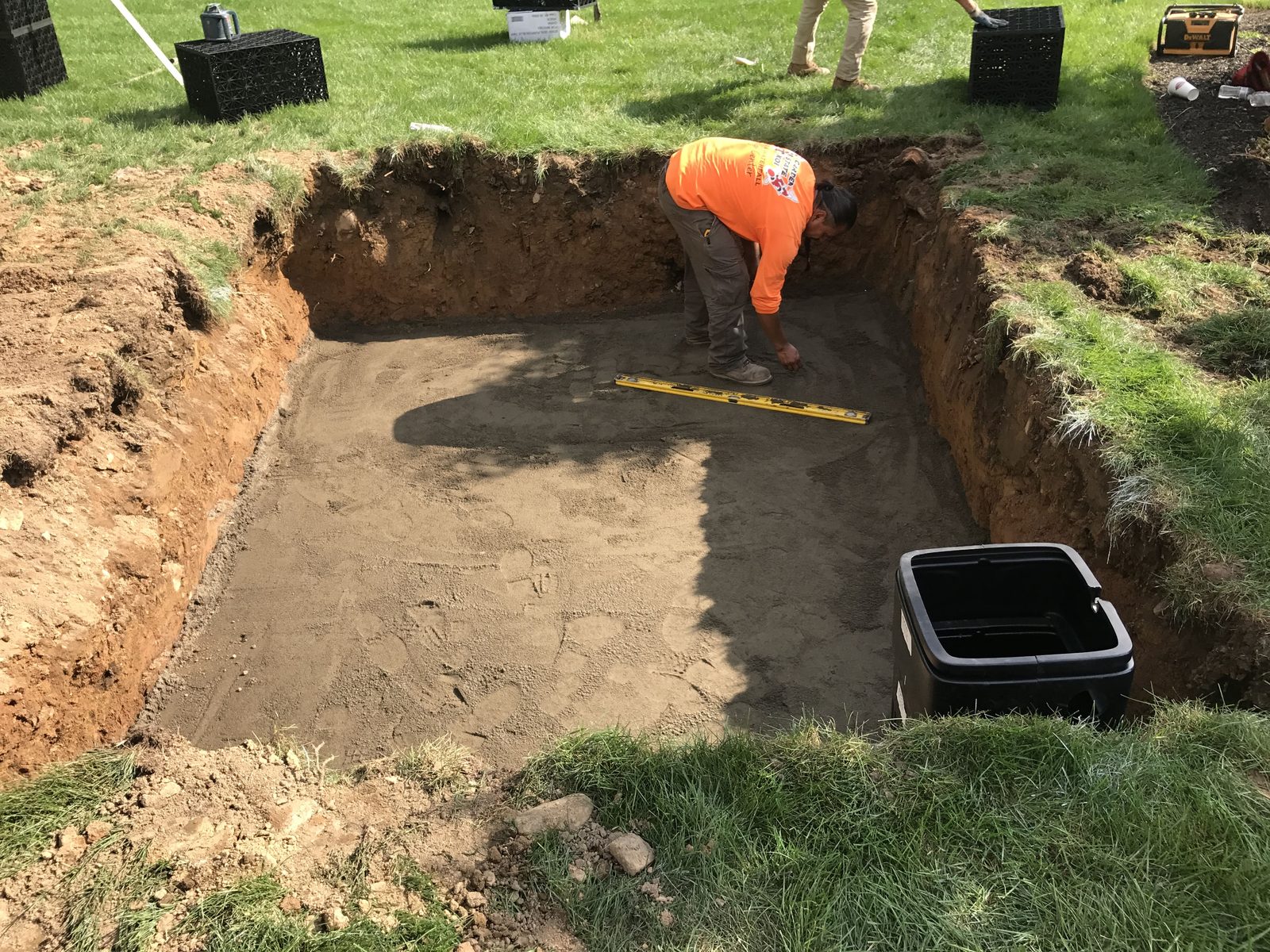
Day 1 — Excavation and Layout: We outline the pond shape with marking paint, excavate to the proper depth and shelf levels, create the stream and waterfall pathway, and ensure proper grade for water flow. Our excavation team handles everything from compact urban yards to sprawling rural properties.
Day 1–2 — Liner and Filtration: We install a protective underlayment followed by a 45-mil EPDM rubber liner (with a lifetime warranty). The BioFalls biological filter and skimmer are positioned and plumbed. All plumbing is tested for proper flow before we move on.
Day 2 — Rock and Gravel: This is where the magic happens. We place natural boulders and river rock throughout the pond, stream, and waterfall. Every rock is hand-selected and positioned to create a natural look. Gravel covers the liner on the bottom, providing surface area for beneficial bacteria and a natural appearance.
Day 2–3 — Water, Plants, and Fish: We fill the pond, add dechlorinator, introduce beneficial bacteria, and plant aquatic plants on the shelves and in the gravel. Once the water is treated and the ecosystem is running, we add your koi and goldfish. We also do a full walkthrough so you know exactly how to care for your new pond.
Timeline: How Long Does It Take?
Most ecosystem pond installations take 2–3 days from excavation to fish. Larger projects with extended streams or complex features may take 4–5 days. The timeline depends on: - Pond size and complexity - Stream and waterfall length - Site access and terrain - Weather conditions
Planning to completion: From your first consultation to enjoying your finished pond typically takes 4–8 weeks, depending on our schedule and your preferred timing.
DIY vs. Professional Installation
We understand the appeal of a DIY pond project — and for handy homeowners, Aquascape DIY kits can be a great option. We sell complete DIY pond kits, waterfall kits, and fountain kits in our retail store.
However, there are important differences:
| Factor | DIY Kit | Professional Install |
|---|---|---|
| Cost | $2,000–$6,000 (materials) | $9,995–$24,995+ |
| Time | 2–4 weekends | 2–3 days |
| Equipment | Hand-dig or rent excavator | Professional equipment |
| Warranty | Product warranty only | Product + installation warranty |
| Rockwork | Basic placement | Artistic, natural design |
| Result | Functional pond | Showpiece water feature |
Our take: If you enjoy hands-on projects and have realistic expectations, DIY can work well for small, simple ponds. For anything medium-sized or larger, professional installation delivers a dramatically better result — and it's done in days, not weeks.
Why the Ecosystem Approach Works Best
Not all ponds are created equal. Traditional "liner and pump" ponds require constant maintenance, frequent water changes, and chemical treatments. The Aquascape ecosystem approach is fundamentally different.
The five key components: 1. Skimmer — Mechanically removes debris from the surface before it sinks 2. BioFalls filter — Houses beneficial bacteria that break down fish waste and nutrients 3. Rocks and gravel — Provide massive surface area for bacteria colonization 4. Aquatic plants — Absorb excess nutrients that would otherwise feed algae 5. Fish — Add beauty and personality while contributing to the nutrient cycle
When these five components work together, you get a self-sustaining ecosystem that stays clear with minimal intervention. That's why our clients spend just 10–15 minutes per week on maintenance — not hours.
Ready to Build Your Dream Pond?
Spring is the best time to start a pond project — you'll enjoy a full season of beauty and give your ecosystem time to mature before winter. Take our free Water Feature Quiz for a personalized recommendation with transparent pricing, or call us at 845-651-4100 to schedule a design consultation.