
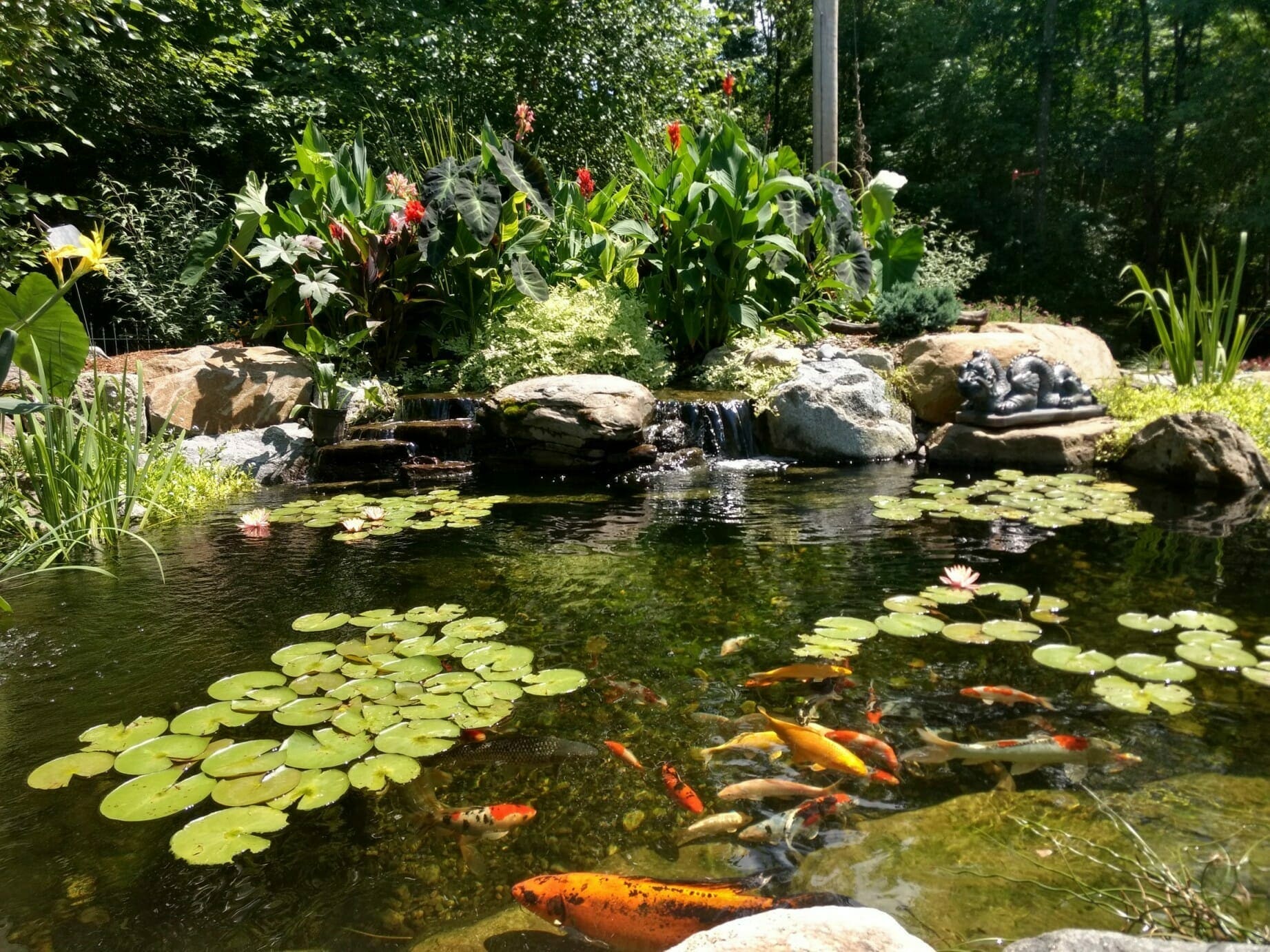
Clear, healthy water doesn't happen by accident — it's the result of a balanced ecosystem working in harmony. Whether you're a new pond owner or a seasoned koi keeper, understanding water quality is the key to a thriving pond. In this guide, we'll break down the science in plain English and give you practical steps to keep your water crystal clear.
The Nitrogen Cycle: The Engine of Your Pond
Every pond runs on the nitrogen cycle — it's the biological process that keeps your water safe for fish. Here's how it works:
Step 1 — Fish produce waste (ammonia). Ammonia is toxic to fish, even in small amounts. Step 2 — Beneficial bacteria convert ammonia to nitrite. These bacteria (Nitrosomonas) colonize your rocks, gravel, and BioFalls filter. Nitrite is also toxic to fish. Step 3 — A second group of bacteria converts nitrite to nitrate. These bacteria (Nitrobacter) complete the cycle. Nitrate is much less toxic. Step 4 — Plants absorb nitrate as fertilizer, removing it from the water. This completes the cycle and keeps the water clean.
Why this matters: If any step in this cycle breaks down — not enough bacteria, too many fish, not enough plants — toxins build up and fish get sick. A properly built ecosystem pond with a BioFalls filter, gravel, and plants keeps this cycle running smoothly.
Beneficial Bacteria: Your Pond's Best Friend
Beneficial bacteria are the unsung heroes of your pond. They colonize every surface — rocks, gravel, filter media, even the inside of your plumbing — and work around the clock to process fish waste.
How to support your bacteria: - Never clean too thoroughly. When you pressure-wash every rock during spring cleaning, you kill beneficial bacteria. We rinse — not sterilize — during drain-and-cleans. - Dose regularly. Add Aquascape Beneficial Bacteria weekly during the season to maintain strong colonies. - After spring opening: Dose heavily for the first 2–3 weeks. Bacteria colonies are depleted after winter and need a boost. - After adding new fish: Extra bacteria helps the system handle the increased bioload. - Keep the pump running 24/7. Bacteria need oxygenated water flowing through the filter to survive. Turning off the pump kills bacteria within hours.
Testing Your Water
Regular water testing takes the guesswork out of pond care. Here are the key parameters to monitor:
Ammonia (NH3): Should be 0 ppm. Any detectable ammonia means your biological filtration isn't keeping up. Causes: new pond syndrome, overfeeding, too many fish, dead bacteria from pump shutdown. Nitrite (NO2): Should be 0 ppm. Elevated nitrite means the second stage of the nitrogen cycle hasn't fully established. Common in new ponds. Nitrate (NO3): Should be under 40 ppm. Some nitrate is normal and feeds your plants. High levels indicate not enough plant coverage or too many fish. pH: Ideal range is 7.0–8.5 for koi. Most NY tap water falls in this range naturally. Avoid trying to chase a "perfect" pH — stability is more important than hitting an exact number. KH (carbonate hardness): Should be above 100 ppm. KH buffers your pH and prevents dangerous pH crashes. If KH is low, add baking soda (1 tablespoon per 500 gallons) to raise it.
Testing frequency:
| Situation | How Often |
|---|---|
| New pond (first 6 weeks) | Every 2–3 days |
| Established pond (routine) | Monthly |
| After adding fish | Daily for 1 week |
| After spring opening | Weekly for 3 weeks |
| Fish acting stressed | Immediately |
Common Water Problems and Solutions
Green water (pea soup): Caused by suspended single-celled algae. Solutions: UV clarifier (most effective), increase plant coverage to 50–60%, dose with beneficial bacteria, reduce feeding. Green water is ugly but not harmful to fish.
String algae: Long, hair-like algae growing on rocks and waterfalls. Some is normal in a healthy pond. Solutions: IonGen electronic clarifier, manual removal, Aquascape SAB Stream & Pond Cleaner, increase plant competition for nutrients.
Foam on the surface: Usually caused by dissolved organic compounds — excess fish food, spawning activity, or decaying plant material. Solutions: Partial water change (10–20%), reduce feeding, remove decaying matter, add activated carbon to the skimmer.
Bad odor: A healthy pond should smell earthy and fresh, like a forest stream. Foul odors indicate anaerobic conditions (no oxygen). Solutions: Check pump operation, clean skimmer debris net, ensure waterfall is running, check for dead fish or decaying matter in the pond.
Cloudy/murky water: Often caused by suspended sediment (after heavy rain) or bacterial bloom (new pond). Solutions: Let it settle naturally, ensure skimmer is running, add flocculant to clump particles for skimmer removal.
The Role of Filtration
In an Aquascape ecosystem pond, filtration happens in two stages:
Mechanical filtration (Skimmer): The skimmer sits at the water surface and pulls in floating debris — leaves, pollen, and surface film — before it sinks to the bottom. The debris net is easy to empty (takes 10 seconds). Think of it as your pond's vacuum cleaner. Biological filtration (BioFalls): Water is pumped from the skimmer up to the BioFalls filter at the top of the waterfall. Inside, filter mats and BioBalls provide surface area for beneficial bacteria to colonize. As water flows through, bacteria convert ammonia and nitrite to safe nitrate. The clean water then cascades down the waterfall back to the pond. The rocks and gravel throughout your pond also serve as biological filtration — they provide millions of square inches of surface area for bacteria. This is why ecosystem ponds outperform traditional "clean bottom" pond designs.
The Role of Plants
Aquatic plants are living filters. They absorb nitrate, phosphate, and other nutrients directly from the water — the same nutrients that algae would otherwise consume.
Plant coverage recommendations: - 50–60% surface coverage from water lilies and floating plants (shade + nutrient absorption) - Marginal plants around the edges (absorb nutrients from shallow water) - Submerged plants like hornwort (oxygenation + nutrient absorption) More plants = less algae. It's that simple. Visit our Plant Packages page for curated collections sized for your pond.
Seasonal Water Quality Changes
Spring: Water quality is most volatile after opening. Bacteria are rebuilding, fish are waking up, and plants haven't started growing yet. Dose heavily with beneficial bacteria and feed sparingly. Summer: Peak bioload — fish are eating and growing, plants are thriving, bacteria are most active. Stay on top of weekly bacteria dosing and monitor for green water. Fall: Falling leaves are the biggest threat. Use a pond net to catch leaves before they sink and decay. Reduce feeding as temperatures drop below 55°F. Switch to cold-water fish food. Winter: Stop feeding below 50°F. Add a de-icer and aerator to keep a hole in the ice for gas exchange. The pond's biological activity slows dramatically — let it rest.
Water Treatment Products We Recommend
Aquascape Beneficial Bacteria — Weekly dose to maintain strong bacteria colonies Aquascape Pond Detoxifier — Removes chlorine, chloramines, and heavy metals from tap water during top-offs Aquascape SAB Stream & Pond Cleaner — Breaks down dead algae and organic debris Aquascape Protective Pond Salt — Reduces fish stress and supports slime coat health (use sparingly) All of these products are available at our retail store in Warwick, NY, or through our Maintenance Membership program.
Need Help With Your Water Quality?
If you're struggling with persistent water quality issues, our team can help. We offer water testing, equipment diagnostics, and treatment plans. Call 845-651-4100 or visit our Maintenance Memberships page to learn about regular care programs that keep your water quality dialed in year-round.