
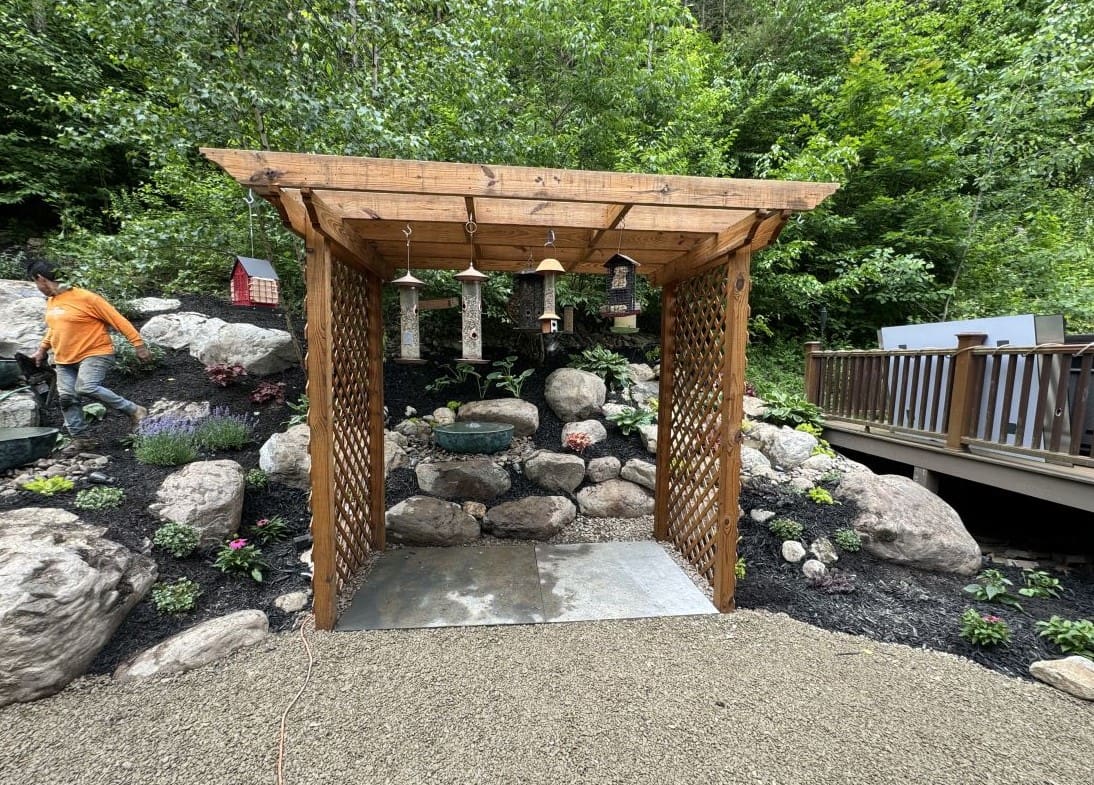
Plant Variety: Including a variety of plants in and around your pond can provide food and shelter for a range of species. Submerged plants oxygenate the water and provide a habitat for aquatic insects and amphibians. Marginal plants offer shelter for frogs and newts, while plants around the pond can provide cover for visiting mammals and birds.
No Fish: While it might be tempting to stock your pond with fish, they can deter other wildlife by eating larvae and eggs. A fish-free pond is often more attractive to a wider range of wildlife.
Maintaining a Wildlife-Friendly Pond
Once you've created your wildlife-friendly pond, regular maintenance is key to keeping it healthy and attractive to wildlife. Here are some tips:
Avoid Chemicals: Pesticides and herbicides can harm pond life. Try to keep your pond as natural as possible.
Control Algae: Too much algae can harm pond life by reducing oxygen levels. Planting plenty of oxygenating plants can help keep algae in check.
Provide Access and Egress: Make sure creatures can easily get in and out of your pond. A sloping side or a ramp can help.
Seasonal Care: Different seasons require different care. In autumn, use a net to catch falling leaves. In spring, thin out plants if they become too dense.
Common Challenges and How to Overcome Them
Creating a wildlife-friendly pond is not without its challenges. Predators, such as cats or raccoons, can be a problem. Try to provide plenty of cover for wildlife to hide, and consider installing a motion-activated sprinkler to deter predators.
Invasive plant species can also be a problem. Be careful to choose native plants for your pond, and remove any invasive species that appear.
Creating a wildlife-friendly pond can be a rewarding project that benefits not just you, but your local ecosystem as well. With careful planning and maintenance, your pond can become a haven for a wide range of species. Remember, every pond is a step towards a more wildlife-friendly world.