
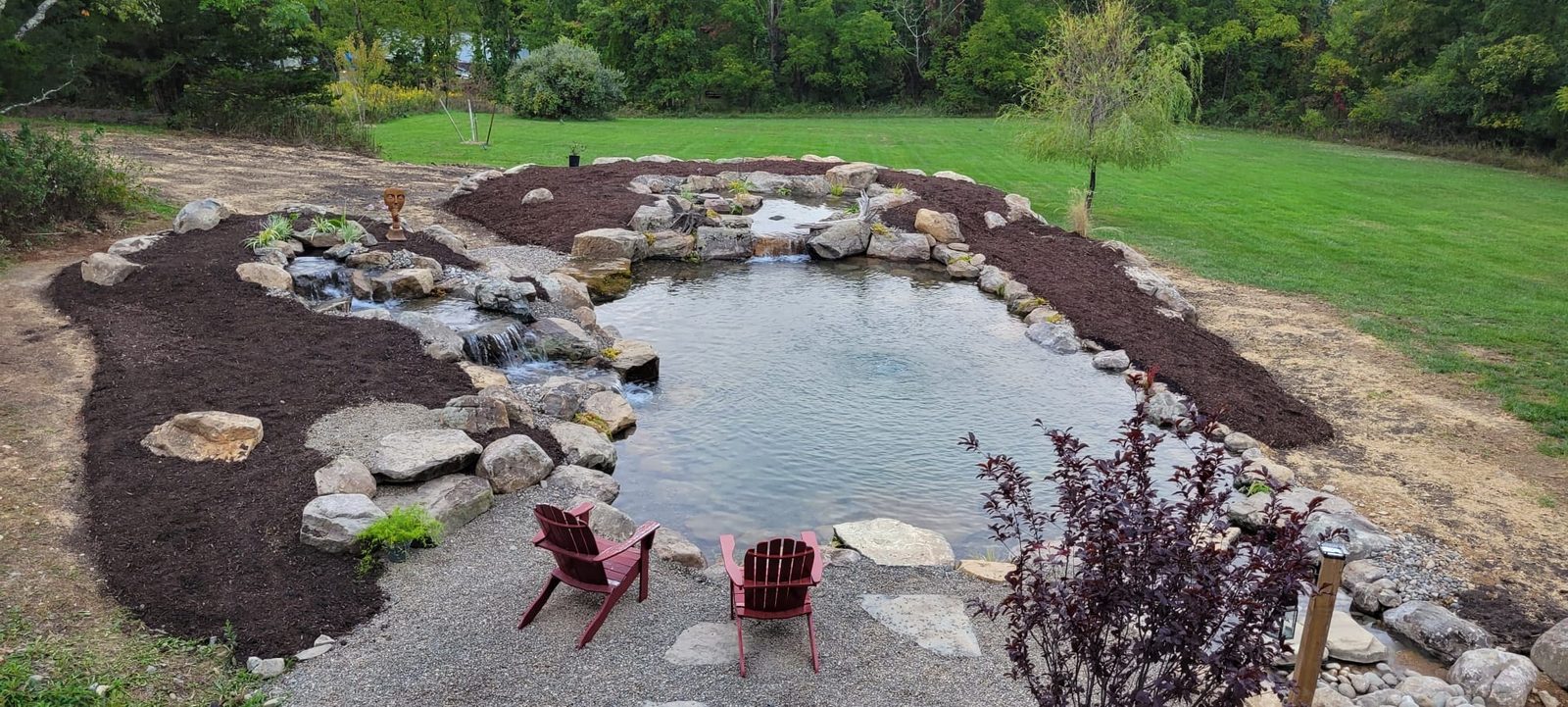
Natural Filtration: Traditional ponds often rely on mechanical filters and chemical treatments to keep the water clean. In contrast, an eco-friendly pond uses plants and beneficial bacteria to naturally filter out pollutants. This creates a healthier environment for pond life and reduces the need for maintenance.
Water Conservation: Eco-friendly ponds are designed to conserve water. This can be achieved through various means, such as using a rainwater harvesting system to fill the pond, or incorporating a pondless waterfall that recirculates the same water.
Wildlife Support: A well-designed eco-friendly pond can provide a valuable habitat for a variety of wildlife. From birds and bees that come to drink, to frogs and fish that make their home in the pond, each creature plays a role in maintaining the balance of the ecosystem.
Designing Your Eco-Friendly Pond:
When designing your eco-friendly pond, start by considering the size and location. It should be big enough to support a variety of plant and animal life, but not so big that it's difficult to maintain. The location should receive plenty of sunlight to support plant growth, but also have some shade to prevent overheating in the summer.
Next, consider the depth. A variety of depths will accommodate different types of plants and wildlife. Shallow areas are great for marginal plants and provide a place for birds and animals to drink, while deeper areas can support fish and submerged plants.
Finally, choose your plants carefully. A mix of submerged plants, marginal plants, and floating plants will provide a range of habitats and help to keep the water clean and oxygenated.
Designing an eco-friendly pond is a rewarding project that can enhance the beauty of your garden while also contributing to local biodiversity and environmental health. By working with Mother Nature, rather than against her, you can create a pond that is not only beautiful but also sustainable and full of life.