
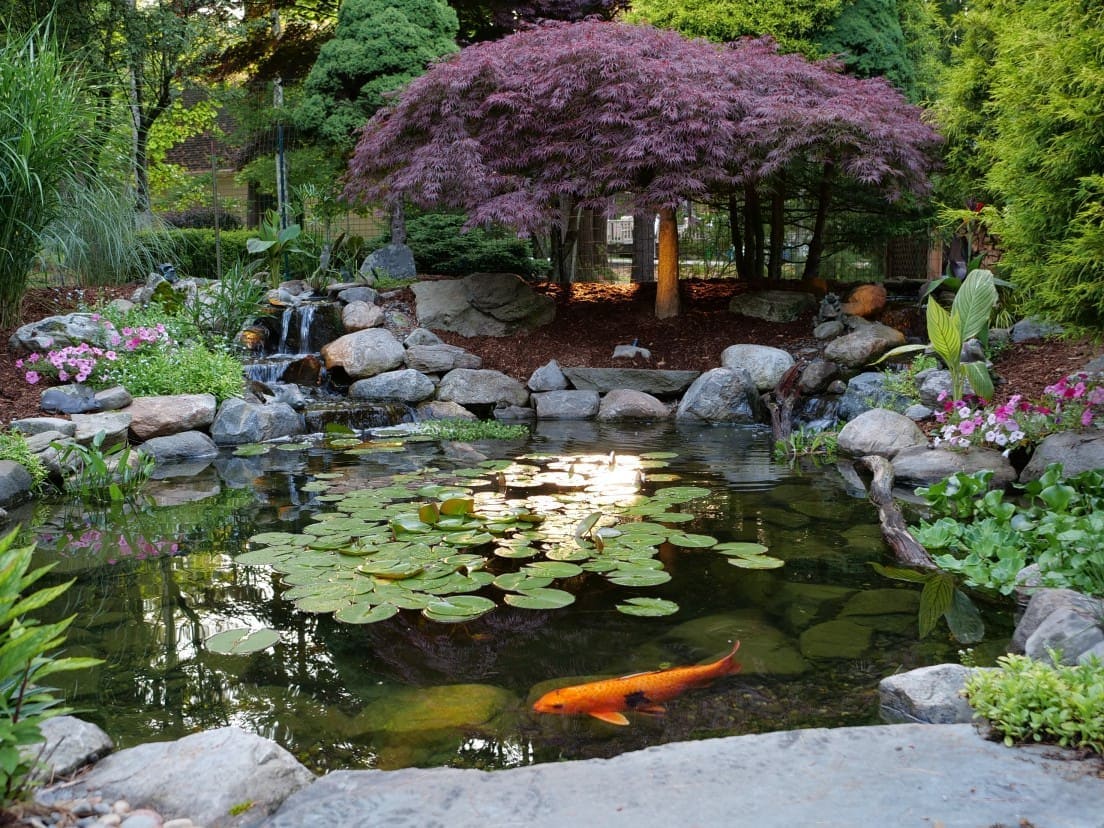
Summer is the most enjoyable season for your koi pond — warm evenings by the waterfall, vibrant fish colors, and lush aquatic plants in full bloom. But the heat brings unique challenges. Here's everything you need to know to keep your water feature healthy, clear, and thriving all summer long.
Water Temperature Management
Koi thrive in water temperatures between 65°F and 78°F. When water temperatures climb above 80°F, oxygen levels drop and fish become stressed. In the NY tri-state area, summer water temps typically peak in the low-to-mid 80s during July and August heat waves.
What you can do: - Shade is your friend. Water lilies provide natural shade — aim for 50–60% surface coverage. Marginal plants along the edges also help. - Don't fight nature. Short-term temperature spikes are normal and your fish will handle them fine in a properly built ecosystem pond. - Avoid adding cold water directly. Sudden temperature changes stress fish more than warm water does. If you need to top off, add water slowly with a trickle.
Oxygen Levels and Aeration
Warm water holds less dissolved oxygen than cold water — and your fish need more oxygen when they're active in summer. This is the #1 cause of summer fish stress in ponds.
Signs of low oxygen: Fish gasping at the surface, congregating near the waterfall, or appearing lethargic. Solutions: - Keep your waterfall running 24/7. This is your primary oxygen source. Never turn it off in summer. - Add an aerator. Submersible aeration kits add oxygen directly to the bottom of the pond where it's needed most. We recommend the Aquascape Pond Aerator for ponds over 11' x 16'. - Don't overstock. More fish = more oxygen demand. A good rule is 1 inch of fish per 10 gallons of water.
Feeding Koi in Summer
Summer is peak feeding season — your koi's metabolism is at its highest, and this is when they grow the most. But overfeeding is one of the most common summer mistakes.
Feeding guidelines: - Feed 2–3 times per day when water is above 70°F - Only feed what fish can consume in 3–5 minutes — remove any uneaten food - Switch to a high-protein growth food (like Aquascape Premium Color Enhancing Fish Food) for maximum color and growth - Stop feeding if water temperature exceeds 85°F — fish lose their appetite and uneaten food pollutes the water - Always feed in the same spot to make it easy to monitor consumption
Algae Prevention and Control
Some algae is normal and even healthy — a thin coating of green on rocks is a sign of a balanced ecosystem. But excessive algae (green water, string algae mats) means something is off.
Why algae blooms happen in summer: - More sunlight = more photosynthesis for algae - Higher temperatures accelerate algae growth - Excess nutrients from overfeeding, fish waste, or fertilizer runoff - Insufficient plant coverage competing for nutrients
Prevention strategies: - Maintain plant coverage. 50–60% surface shade from lilies dramatically reduces algae. - Use beneficial bacteria. Dose weekly with Aquascape Beneficial Bacteria — it outcompetes algae for nutrients. - Don't overfeed. Uneaten food is algae fuel. - Add an IonGen. This electronic clarifier releases a controlled amount of copper ions to prevent string algae without harming fish or plants. - Consider a UV clarifier. For persistent green water, a UV clarifier kills suspended algae as water passes through. It's the nuclear option — very effective.
Water Top-Offs and Evaporation
You'll lose water faster in summer due to evaporation, especially if you have a long stream or multiple waterfalls. This is normal — not a leak.
Normal summer evaporation: 1/2 to 3/4 inch per day in hot, dry weather. Ponds with long streams or waterfalls may lose slightly more. Top-off tips: - Use a garden hose with a dechlorinator (like Aquascape Pond Detoxifier) — chlorine and chloramines in tap water kill beneficial bacteria and stress fish - Add water slowly to avoid temperature shock - Consider an auto-fill valve connected to your garden hose for hands-free top-offs (we install these as an add-on) - If losing more than 1 inch per day, you may have a leak — see our Pond Leak Detection Guide
Plant Care in Peak Season
Summer is showtime for your aquatic plants. Here's how to keep them looking their best:
Water lilies: Fertilize monthly with aquatic plant fertilizer tabs pushed into the soil. Remove yellowing leaves and spent blooms to encourage new growth. Marginal plants: Trim dead foliage. Divide overcrowded plants in late summer. Hardy varieties like blue iris and pickerel rush are maintenance-free. Floating plants: Water hyacinth and water lettuce will multiply rapidly in summer. Remove excess to maintain 50–60% coverage — too much blocks light and oxygen exchange. Browse our Plant Packages for curated collections designed for different pond sizes.
Summer Predator Protection
Great blue herons are most active from May through August. Other predators include raccoons, mink, and neighborhood cats.
Protection strategies: - Provide hiding spots. Fish caves, deep shelves, and underwater ledges give koi places to hide. - Floating plant coverage makes it harder for herons to spot fish. - Motion-activated deterrents like sprinklers or decoys can help. - Proper depth (2 feet minimum) makes it difficult for herons to wade and hunt. - Never remove all hiding cover when cleaning — fish need places to feel safe.
When to Call a Professional
Most summer pond care is straightforward, but some situations warrant a call to the pros:
Call us if you notice: - Fish with visible sores, white spots, or fin damage - Water that stays cloudy or green despite treatment - Sudden fish deaths (especially multiple fish) - Unusual odors from the pond - Pump or filter malfunctions - Water loss exceeding 1 inch per day
Let Us Handle the Maintenance
Don't want to think about it? Our Maintenance Membership packages include regular visits, water testing, filter cleaning, plant care, and fish health checks. We'll keep your pond in peak condition while you simply enjoy it. Call 845-651-4100 or visit our Maintenance Memberships page to learn more.